
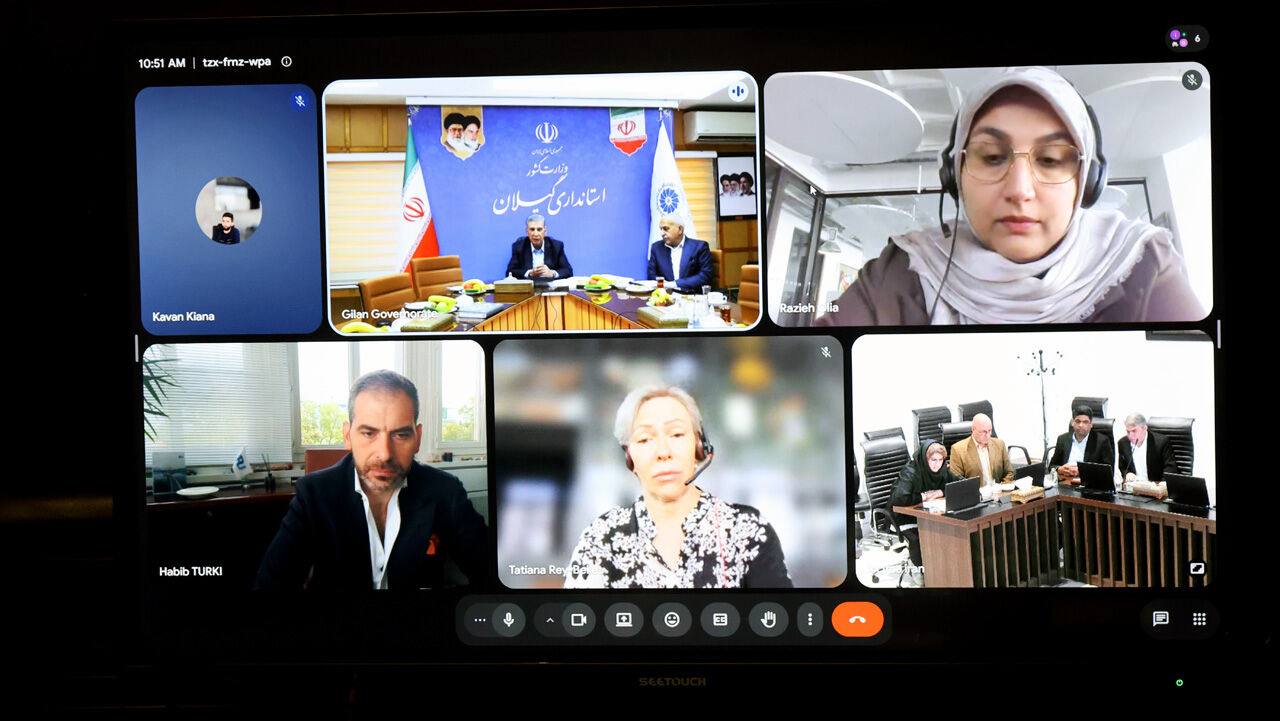
Iran's Chamber of Commerce and the International Road Transport Union (IRU) are working together to overcome financial obstacles that have hindered cross-border trade, with both sides expressing optimism about finding practical solutions.
In a recent webinar, ICCIMA President Samad Hassanzadeh and IRU Secretary-General Habib Turki discussed three potential routes for facilitating money transfers between Iran and the global transport body, which have been complicated by international sanctions.
Hassanzadeh proposed a limited barter mechanism under IRU supervision, allowing Iran to settle part of its obligations through non-sanctioned goods or through a bank designated by the union. He also requested an increase in Iran's TIR carnet quota and credit line, warning that without such measures, Iranian operators might be forced to abandon TIR procedures altogether.
"We are very pleased that a scientific and economically cultured figure has accepted this responsibility," Hassanzadeh said, welcoming Turki to his new role. He expressed hope that the cooperation would enter a new era, strengthening Iran's position in the regional transit network.
Turki responded positively, emphasizing that his priority is the continuation of cooperation and problem-solving. "We stand firmly and resolutely by your side," he told his Iranian counterparts. He noted that based on the channels evaluated so far, he is "very hopeful" that the fund transfer issue will be resolved.
Key topics discussed included increasing Iran's credit with the IRU, accelerating carnet deliveries to Iran, and selecting new agents to facilitate operations.
The talks signal a shared commitment to maintaining Iran's connectivity to international transport networks despite ongoing financial restrictions, with both sides viewing the dialogue as a constructive step forward.