
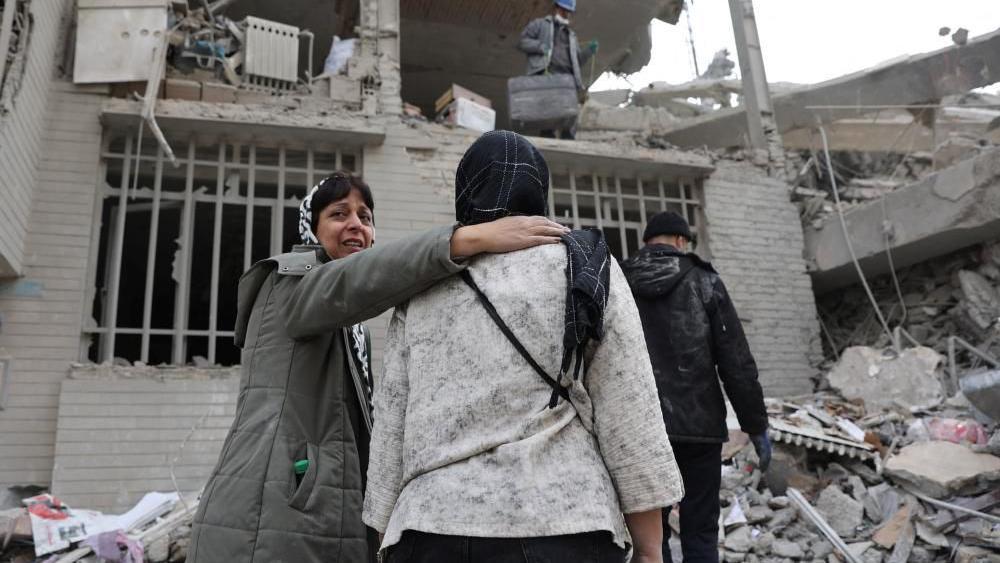
A new report by the Iranian Parliament’s Research Center suggests that war does not always discourage young people from getting married. Examining marriage registration data from two recent conflicts involving Iran, the study found that marriages unexpectedly increased during the 12-day war in June 2025, while a later and longer conflict caused a sharp but largely temporary decline.
The findings challenge the common assumption that armed conflict inevitably suppresses family formation. Instead, researchers argue that the impact of war depends on its duration, intensity, public perceptions and the broader social environment. The report also recommends a series of policy measures to support marriage during periods of national crisis.
During the 12-day war, Iran registered 21,684 marriages nationwide. The conflict, which began with Israeli attacks on June 13, 2025, and ended on June 24, 2025, saw marriage registrations rise 20.9% from the same period in summer 2024.
Researchers say the figures indicate that the short conflict did not create enough uncertainty to persuade most young people to postpone marriage. Registration data showed increases in nearly every province except Tehran, Kurdestan and Sistan-Baluchestan.
Even Tehran, which experienced the heaviest attacks during the conflict, recorded only a modest decline. Registered marriages fell from 2,672 during the comparable period in 2024 to 2,521, a decrease of 5.7%.
The report suggests that the limited duration of the conflict prevented widespread feelings of insecurity. It also notes that some couples and families may have taken advantage of wartime conditions to organize simpler and less expensive ceremonies, similar to patterns seen during the Covid-19 pandemic.
One striking example came on June 14, 2025, one day after the war began and coinciding with Eid al-Ghadir, when 3,681 marriages were registered nationwide—an unusually high daily figure compared with surrounding days.
New Reality
The picture changed during the second conflict, referred to in the report as the 40-day Ramadan War, which began on February 28, 2026 following attacks by the United States and Israel.
Marriage registrations fell sharply as the conflict unfolded. During Esfand 1404 (February-March 2026), registrations dropped 51.6% compared with the same month a year earlier.
Unlike the earlier conflict, the decline was nationwide rather than concentrated in provinces directly affected by military strikes. Researchers attribute the fall to the combined effects of the war's psychological shock, the expansion of bombing campaigns, and the coincidence with the holy month of Ramadan.
The initial shock, however, proved temporary. Between March 21 and May 5, 2026, while hostilities continued before a ceasefire took hold, registered marriages totaled 51,474, down 6.5% from 55,024 during the same period a year earlier.
Although registrations remained below previous levels, the much smaller decline suggests that families gradually resumed postponed wedding plans. According to the report, the Nowruz holidays, temporary closures of workplaces and government offices, and more frequent family gatherings helped normalize marriage trends despite the conflict.
Resilient Institution
Overall, the researchers conclude that marriage remains a resilient social institution in Iran. While prolonged wars and heightened uncertainty can temporarily delay family formation, they do not eliminate the desire of young people to marry.
To strengthen that resilience, the report recommends policies built around three priorities: moral support for marriage, continued financial assistance and the promotion of simple wedding ceremonies.
Among the proposals are encouraging public officials and media organizations to portray marriage as a national priority, expanding television programming promoting family formation, organizing simple public wedding ceremonies and providing greater access to marriage counseling and matchmaking services.
The report also calls for preserving marriage loans, expanding assistance for university students, implementing the long-delayed Youth Marriage Facilitation Law adopted in 2005, providing interest-free loans for housing and household essentials, offering temporary and permanent housing for newlyweds, converting unused government buildings into temporary accommodation and making public venues available free of charge for wedding ceremonies.
Researchers argue that supporting marriage during crises serves broader social goals beyond demographics. Strong family formation can boost public morale, strengthen social cohesion and provide young people with greater confidence about the future. For that reason, the report concludes, protecting marriage should become an integral part of Iran's crisis-management and social policy agenda.