
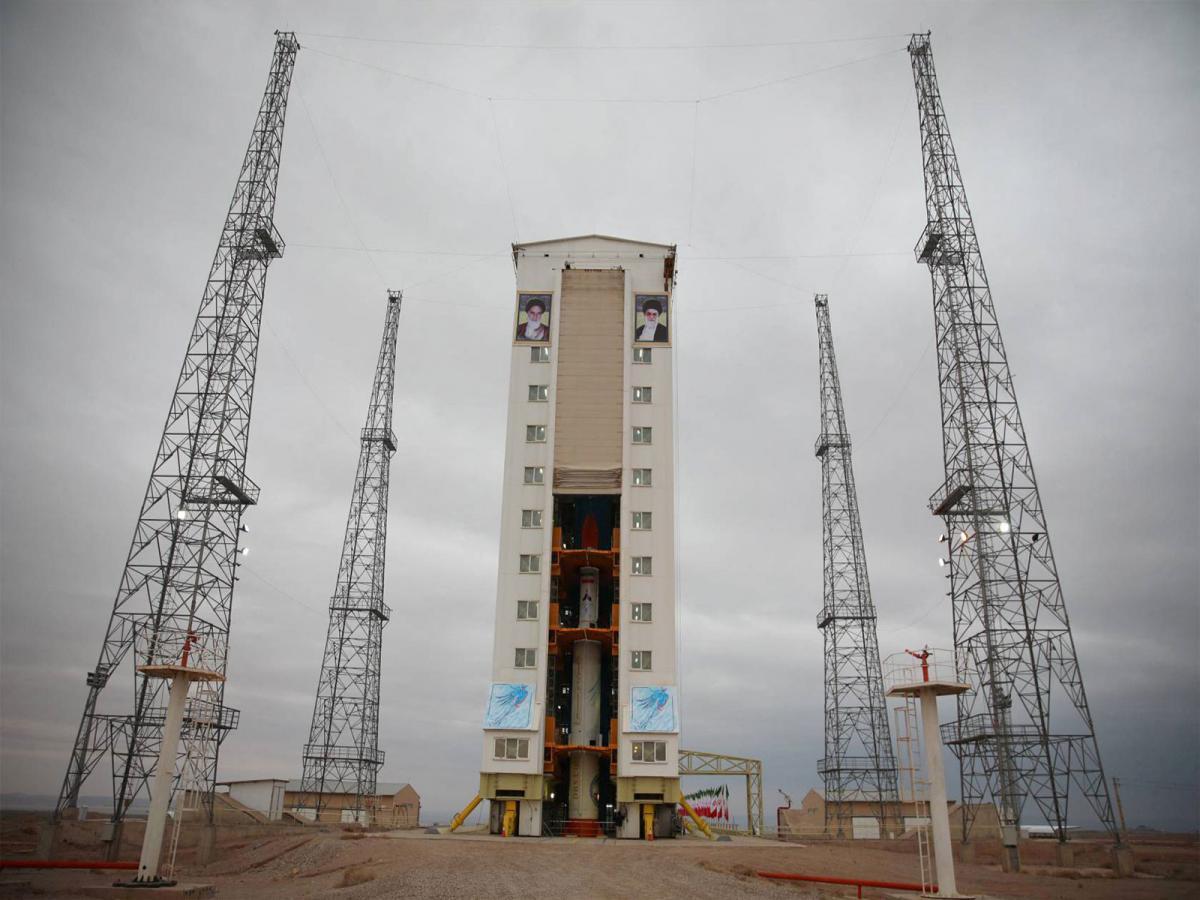
Iran is advancing a multi-pronged space development drive, with new satellite control networks, launch facilities, and next-generation telecommunications satellites – including a geostationary orbiter – currently in the pipeline, the head of the Iran Space Agency (ISA) said.
Hassan Salarieh outlined a range of projects spanning infrastructure, satellite manufacturing, and data services, being pursued under the country's 10-year national space roadmap and the Seventh National Development Plan. Speaking to IRNA, he said key initiatives include the expansion of the Chabahar Space Launch Base, the construction of specialized satellite testing laboratories, and the establishment of an integrated nationwide network of satellite control centers.
According to Salarieh, the geographical distribution of control centers will shorten communication intervals with orbiting satellites, accelerate in-orbit testing, and extend operational lifespans. The agency has also prioritized a network of mobile ground stations to ensure uninterrupted delivery of satellite data and imagery across the country. Several of these infrastructure projects entered operational service over the past Iranian year (March 2025–March 2026), with more facilities expected to be inaugurated in the coming months.
On the manufacturing front, Salarieh highlighted the Nahid-2 telecommunications satellite as a major milestone. Launched last year into low Earth orbit (LEO), it became Iran's first domestically developed telecom satellite, designed and built by the Iranian Space Research Center. Most of its initial mission objectives have been achieved, he said, providing valuable engineering data for future designs.
Building on that experience, an upgraded version of Nahid-2 is already under development to support satellite constellation services, which would improve coverage and reliability. Meanwhile, work has begun on the more ambitious Nahid-3 project, which is intended to operate from geostationary orbit (GEO) at approximately 36,000 kilometers above Earth.
Unlike LEO satellites, which require large constellations for continuous global coverage, a single GEO satellite can cover a vast region with persistent connectivity. Salarieh noted that Nahid-3 is currently in the design phase, with several major subsystems – including propulsion systems and thrusters – already under construction. The satellite is seen as a strategic asset for expanding domestic communications capabilities.
Implementation of all these projects will continue through the current Iranian year (March 2026–March 2027), with officials projecting steady progress in both ground infrastructure and orbital assets.