
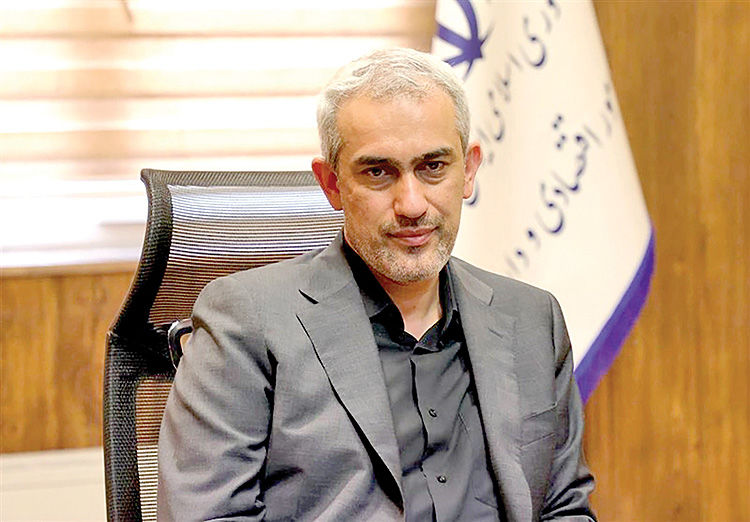
Iran’s minister of economic affairs announced that the government has set an inflation target of 25–30% for the next fiscal year, 1405 (March 2026–March 2027), as part of a wider strategy to stabilize prices and strengthen economic recovery.
Ali Madanizadeh said the ministry’s foremost priority is reducing inflation from its current level of around 40%.
He explained that the government is following a dual-track policy. In the short term, efforts focus on securing adequate supply of essential goods to ease price pressures and cool down consumer markets. These immediate steps, he noted, are intended to soften the impact of rising prices on households and restore a sense of stability.
For sustainable disinflation, Madanizadeh stressed the need for deeper structural reforms. The government’s long-term program centers on reducing the fiscal deficit and correcting structural imbalances in the banking system—two core factors he described as the roots of persistent inflation episodes in recent years. Only through addressing these foundations, he argued, can inflation be durably contained.
The minister also outlined internal initiatives to implement the Seventh Development Plan. A dedicated monitoring committee has been established within the ministry to track all assigned responsibilities.
According to Madanizadeh, more than 150 projects have already been launched, along with six “mega-projects” under his direct supervision, aimed at removing barriers to achieving the targeted 8% economic growth.
He emphasized that such growth requires strong policy coordination across government bodies and resolution of key macroeconomic challenges.